

Supersprint Distanz 08.08.2026
Röthlstein
erster Gesamtsieg Triathlon
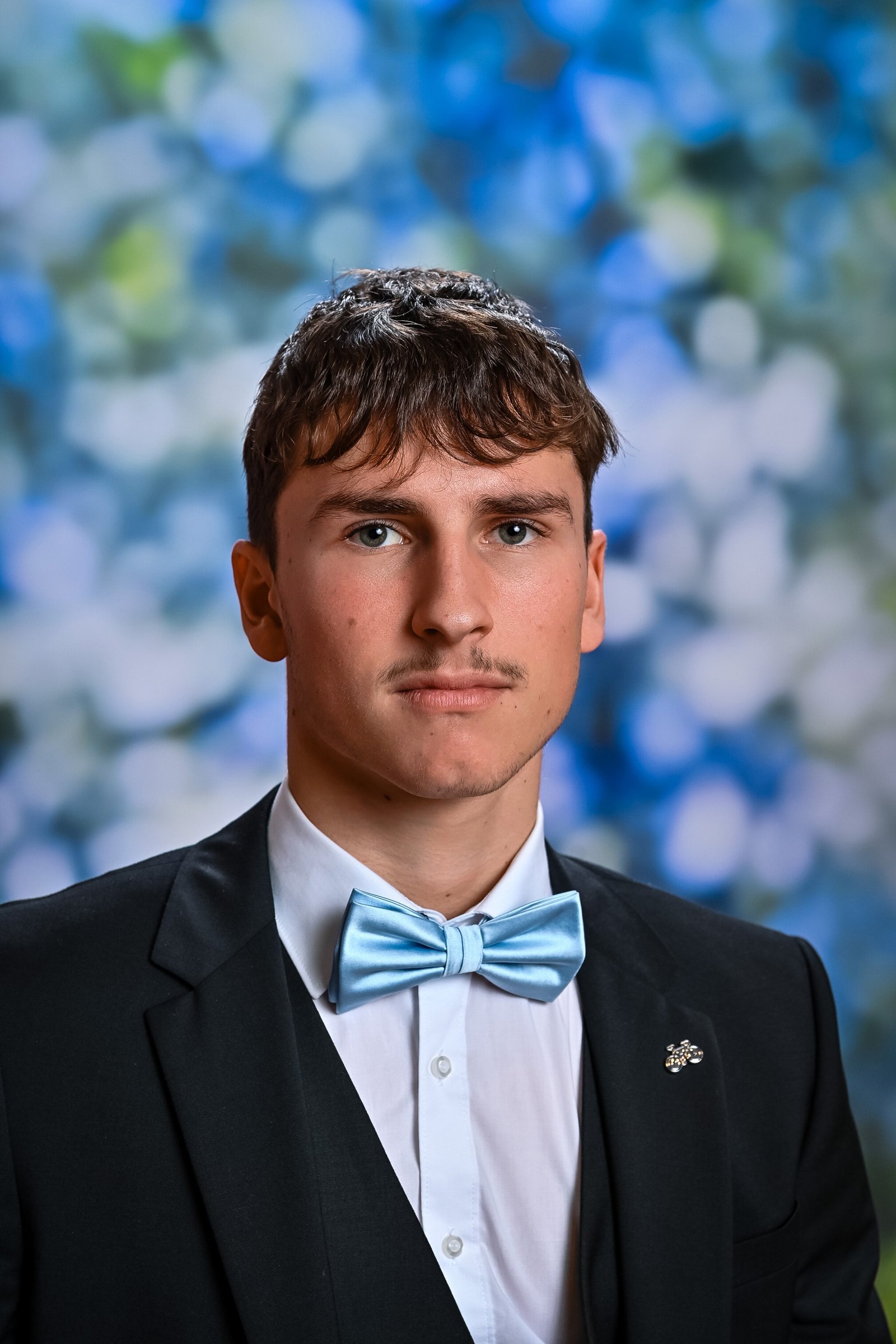
Software engineering student and triathlete.
years old · days :)
Bachelor`s studies at Graz University of Technology.
Compact prediction learning is a training principle that encourages neural networks to reuse a small number of latent representations while maintaining task performance. This bachelor thesis investigates whether such compactness constraints lead to structured and reusable internal representations in neural networks.
The approach is evaluated on a set of synthetic binary prediction tasks and synthetic linear prediction tasks as well as on a convolutional neural network trained on a pairwise MNIST comparison task. Compactness is enforced by an additional loss term applied to the latent representations. The compactness objective is defined as:
$$E = \sum_{k \neq l} \Bigl(1 + \log \sum_i\lvert g_i(x^{(k)}) - g_i(x^{(l)}) \rvert\Bigr).$$
The results show that for simple synthetic tasks, compact prediction learning leads to highly structured and low-dimensional latent spaces that reflect task-relevant structure. In contrast, for the convolutional setting, the compact objective causes a strong collapse of the latent space, removing most digit-specific information and reducing classification accuracy.
These findings indicate that compact prediction learning acts as a strong inductive bias that enforces minimal, task-aligned representations, but may limit information retention in more complex perceptual tasks.
View bachelor`s thesis PDF200 ECTS credits according to Bachelor and Master in Software Engineering and Managemnt done
Higher technical college specializing in mechatronics.
Graduated with good success.
This diploma thesis addresses the limited evaluation of battery charging processes in AVL Drive 5, where previously only a few parameters were considered. To over- come this limitation, the existing Python-based analysis was extended to support both AC and DC charging sessions and to automatically calculate a broad range of key performance indicators. The implemented solution standardizes input data, detects charging events, and generates comprehensive results that are directly integrated into AVL Drive 5 and its database. As a result, charging analyses are now more complete, accurate, and immediately available to engineers without additional manual effort. The outcome is an efficient and scalable framework that significantly enhances benchmarking capabilities and provides a solid foundation for future extensions in charging analysis.
View diploma thesis PDFFederal Academic High School Rein.
Graduated with excellent success.
Supporting and assessing students and creating assignments for Introduction to Structured Programming, Computer Methods for Statistics, and Data Structures and Algorithms.
Extended a Python-based vehicle data analysis system as part of my diploma thesis.
Supported and assessed students and created assignments for Introduction to Structured Programming.
Programmed a Phoenix controller for a new smart-grid project.
Tested a VR system for virtual plant tours and extended an interactive 3D viewer using JavaScript.
Service motors (clean, disassemble, repair, …)
Tutoring in computer science, mathematics, mechanics, and electrical engineering.
A remote-controlled model vehicle developed by a two-person team using Bluetooth communication. I focused on electronics and Arduino programming for processing control signals and driving the motors.
C++, Java, Python, C, SQL, JavaScript, Scala, Machine Learning, Deep Learning
LaTeX, Git, Linux, Office 365, Web Development, SolidWorks
German (native), English (B2/C1), French (A1)
Supersprint Distanz 08.08.2026
erster Gesamtsieg Triathlon
10k 01.08.2026
erster Gesamtsieg
30°C +
Laufen: 10km
36:24min, 3:38min/km Strava
Olympische Distanz 14.06.2026
erste Europameisterschaft
5. Platz AG 20-24
Sprint Distanz 16.05.2026
4. Platz Gesamt, 1. Platz U20
Sprint Distanz 03.05.2026
5. Platz Gesamt, 2. Platz U20
Olympische Distanz 01.05.2026
10. Platz Gesamt, 1. Platz U20
Viertelmarathon 12.04.2026
2. Platz Gesamt
Lauf: 10.6km
36:45min, 3:28min/km Strava
10k 01.03.2026
5. Platz Gesamt, 2. Platz U20
Lauf: 10km
35:51min, 3:35min/km Strava
10k 25.01.2026
7. Platz Gesamt, 1. Platz U20
Lauf: 10km
36:21min, 3:38min/km Strava
5k 31.12.2025
2. Platz U20
Lauf: 5km
17:30min, 3:30min/km Strava
5k 30.11.2025
2. Platz U20
Lauf: 5km
17:21min, 3:28min/km Strava
70.3 19.10.2025
5. Platz M18-24
schnellster Bike-Split M18-24
Olympische Distanz 31.08.2025
4. Platz Gesamt, 2. Platz U20
Supersprint Distanz 09.08.2025
2. Platz Gesamt, 1. Platz M Allgemein
Olympische Distanz 03.08.2025
17. Platz Gesamt, 1. Platz U18
Olympische Distanz 28.06.2025
7. Platz Gesamt, 1. Platz U18
Olympische Distanz 01.05.2025
17. Platz Gesamt, 1. Platz U18
10k 23.02.2025
8. Platz Gesamt, 1. Platz U20
Laufen: 10km
37:46, 3:47min/km Strava
10k 26.01.2025
erstes Mal sub40
1. Platz U20
Laufen: 10km
39:52, 3:59min/km Strava
5k 31.12.2024
5. Platz U20
Laufen: 5.3km
19:05, 3:42min/km Strava
5k 01.12.2024
1. Platz U20
Laufen: 5km
18:55, 3:47min/km Strava
Halbmarathon 24.11.2024
Laufen: 21.3km
1:34h, 4:27min/km Strava
Olympische Distanz 18.08.2024
17. Platz Gesamt, 1. Platz U18
Supersprint Distanz 10.08.2024
4. Platz Gesamt, 1. Platz U18
Berglauf 28.07.2024
1. Platz Teamwertung, 2. Platz Gesamt Läufer
Laufen: 6.1km mit 300HM
39:30min Strava
Bergtriathlon 01.06.2024
Olympische Distanz 01.05.2024
erster Triathlon, 1. Platz U18
Radrennen 21.04.2024
erstes Radrennen
Radfahren: 126km
4:12h, 29.8km/h Strava
10k 28.01.2024
Laufen: 10k
43:24, 4:22min/km Strava
Halbmarathon 08.10.2023
erster Halbmarathon
Laufen: 21.1k
1:32h, 4:22min/km Strava
Supersprint Distanz 12.08.2023
erster Triathlon (Staffel)
Crosslauf 05.03.2023
Viertelmarathon 08.10.2022
Laufen: 10k
43:56min
Crosslauf 13.03.2022
Laufen: 3.8k
15:24min